Quick answer: don't wait to feel motivated. Pick something small, like 10 minutes, put it in your diary like an appointment, and make it as easy as possible to start. Motivation usually turns up once you're moving, not before.
That's the honest answer to how to get motivated to exercise. Most people who struggle aren't lazy. They're waiting for a feeling that only comes after they've started. Below are nine practical ways to get going, what you're aiming for long term according to the NHS, and a simple first week you can start tonight.
If you haven't exercised for a while, or you have a medical condition or concerns, the NHS says to speak to your GP first.
How to get motivated to exercise: motivation follows action
The British Heart Foundation's advice for dark, wet winter days is simple: tell yourself you're only going to do a couple of minutes, and you might find yourself going longer than expected. That's the whole trick in one line.
You don't need to feel like a gym person to start. You need to make the first step so small that it's harder to argue with it than to do it. Ten minutes of walking. Five squats while the kettle boils. One song and a dance round the kitchen. Once you've started, carrying on is much easier.
Why motivation disappears (and why that's normal)
Knowing how to get motivated to exercise starts with knowing why motivation fades. If you've ever started January full of fire and stopped by February, you're not broken. A British Heart Foundation article on staying motivated says that even if you feel really motivated at the start, there may come a time when your motivation drops off. That's expected.
What keeps people going isn't more willpower. It's habits and routines. Dr Katy Tapper, a psychologist quoted by the BHF, says that by creating consistent routines and habits, it gets easier to make healthy choices even when you're not feeling as motivated.
The BHF also lists the usual things that get in the way: not having time, worrying it isn't safe, feeling foolish in a gym, low energy, physical difficulties and finding exercise boring. Each of those has a fix, and most of the fixes are about making it smaller and easier.
If low mood is what's stopping you, and it's lasted more than two weeks or you're struggling to cope, the NHS says to see a GP. Exercise isn't a replacement for proper help.
9 ways to get motivated to exercise
1. Start tiny
Big goals feel heavy. Small ones get done. The BHF suggests breaking exercise into bite-size chunks you can fit into your life, like a couple of squats every time you make a cup of tea, or a 10 minute walk after dinner.
If you're wondering how to get motivated to exercise at all, this is where to start. Pick a start so small it feels almost silly. Ten minutes is plenty for week one. You can build from there.
2. Pick something you actually enjoy
If you hate running, a running plan won't save you. Walking, swimming, dancing, cycling, lifting, a class with a mate: it all counts. The BHF says getting active doesn't have to mean formal exercise. Gardening or playing with the grandkids, it all adds up.
If you're not sure what you'll enjoy, try three different things in a fortnight and keep the one you looked forward to most.
3. Plan it like an appointment
The BHF's advice from Dr Tapper is to write down exactly what you'll do, where you'll do it, and when. For example, a 30 minute walk after breakfast, plus one class on a set evening. One BHF reader said booking activities in advance made them feel obliged to do them.
Put it in your phone's calendar. Same days, same time. That's one less decision to make when you're tired.
4. Lay your kit out the night before
Make the start of the session as easy as possible. Shoes by the door, kit on the chair, water bottle filled. If you train in the morning, it should take you less than a minute to be ready to go. Every small barrier you remove is one less excuse in the moment.
5. Exercise with someone
The BHF suggests bringing a friend or family member if it helps you feel more comfortable, or walking with a friend so you can chat. Knowing someone's waiting for you at the park gate at 7pm is a strong reason to turn up.
No one free? A beginner class, a running group or a parkrun can do the same job.
6. Track it
Tick it off. A calendar on the fridge, a note on your phone, or the tracker that comes with our free 7-day plan. Seeing a run of ticks builds its own momentum, and on a bad week it reminds you how far you've come.
7. Give yourself a reward
The BHF suggests linking exercise to something you like, such as a favourite TV show you only let yourself watch while you're on the bike, or a podcast you only listen to on your walk. Rewards don't need to be food or shopping. They just need to be something you look forward to.
8. Follow a plan
Deciding what to do every day is tiring. A plan is one of the simplest ways to get motivated to exercise, because it does the thinking for you. If you want to run, the free NHS Couch to 5K plan guides you from the couch to running 5km in nine weeks, with three runs a week and rest days in between. We've got a full guide to Couch to 5K too.
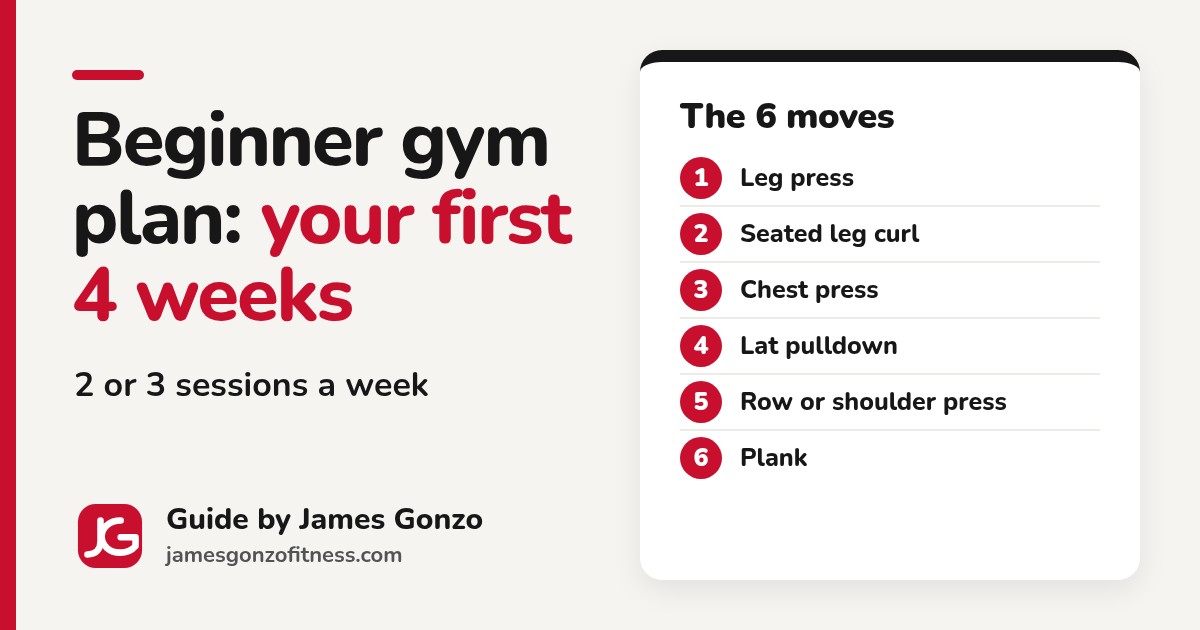
If the gym's more your thing, our beginner gym plan for the first four weeks tells you what to do each session. At home, our kettlebell exercises for beginners are a good next step.
9. Expect bad days, and plan for them
You will miss sessions. Everyone does. The BHF suggests thinking ahead about the barriers you're likely to face, and asking yourself what excuses you're likely to tell yourself, so you've got an answer ready. Cold or wet? Swap the walk for something indoors. No time? Do 10 minutes instead of 30.
There's good news from the research on habits too. A study by Lally and colleagues, published in the European Journal of Social Psychology in 2010, followed people building a new daily habit, and found that missing one opportunity did not materially affect the habit forming. One missed session isn't the end. Just don't miss the next one.
How much exercise you're aiming for
Part of how to get motivated to exercise is knowing what you're working towards. This is the long-term target, not day one. The NHS says adults aged 19 to 64 should aim to:
- do strengthening activities that work all the major muscle groups on at least 2 days a week;
- do at least 150 minutes of moderate intensity activity a week, or 75 minutes of vigorous intensity activity a week;
- spread exercise evenly over 4 to 5 days a week, or every day;
- cut down time spent sitting or lying down, and break it up with some activity.
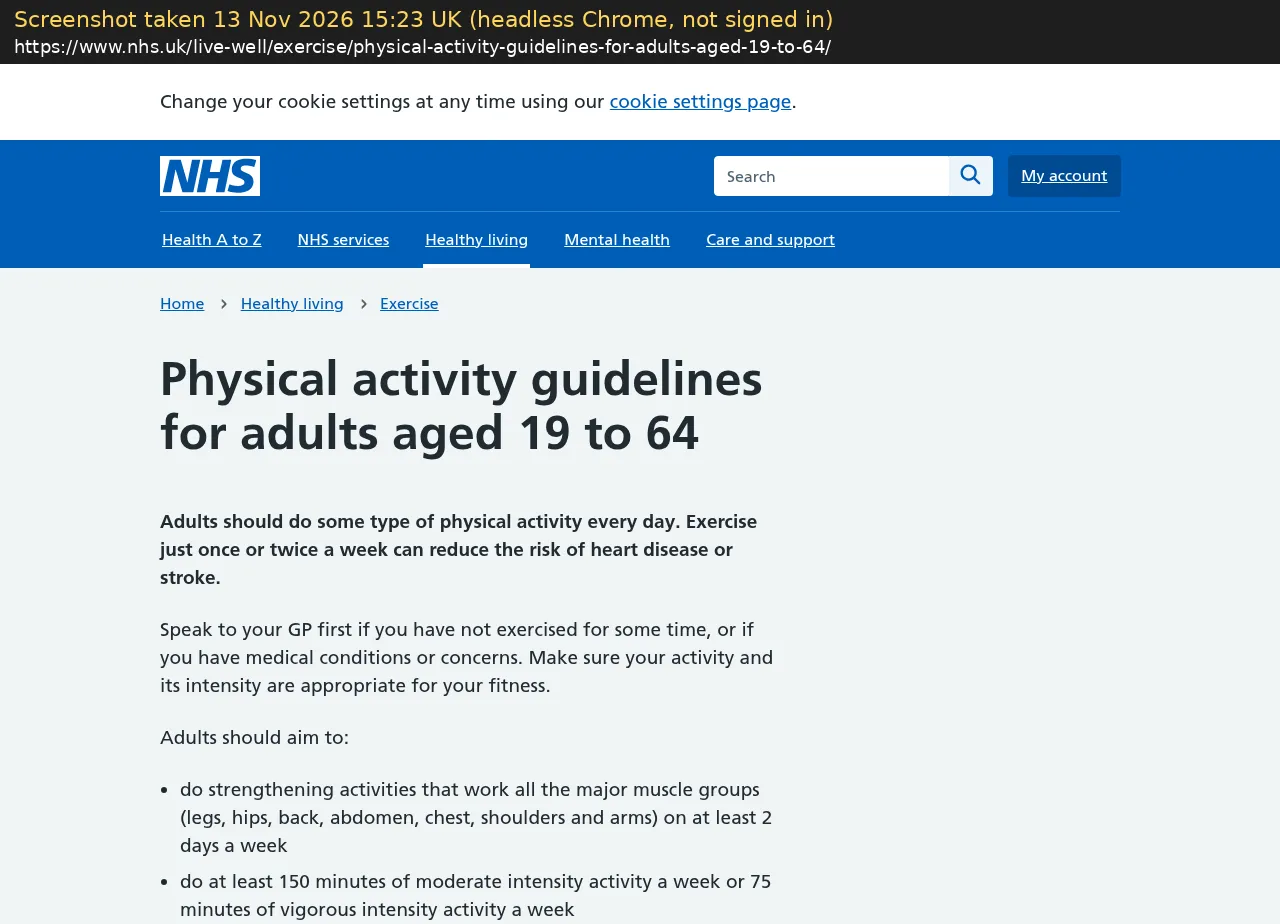
The NHS also says adults should do some type of physical activity every day, and that exercise just once or twice a week can reduce the risk of heart disease or stroke.
If 150 minutes sounds like a lot right now, that's fine. Learning how to get motivated to exercise is about the next session, not the whole week. Build towards it. Ten minutes a day is 70 minutes a week. Add a little each week and you'll get there.
Your first week: a simple plan
Here's a gentle first week for how to get motivated to exercise when you're starting from nothing. It's a starting point, not a test.
| Day | What to do | Time |
|---|---|---|
| Monday | Brisk walk | 10 minutes |
| Tuesday | Home session: squats to a chair, wall press-ups, marching on the spot | 10 minutes |
| Wednesday | Rest, or a short walk | Up to 10 minutes |
| Thursday | Brisk walk | 15 minutes |
| Friday | Home session, same as Tuesday | 10 to 15 minutes |
| Saturday | Something you enjoy: a swim, a bike ride, a dance, a walk with a mate | 20 minutes |
| Sunday | Rest, and tick off your week |
At the end of the week, look at your ticks. If it felt easy, add five minutes to each session next week. If it felt hard, repeat the same week. Both are fine.
Want it done for you? Our free 7-day plan gives you three 20 minute workouts you can do at home with no kit, one clear action a day, and a printable tracker. After that, Fit Again in 6 Weeks is a self-guided programme with three training levels to keep you going.
When a coach helps
Some people do best on their own. Others need someone who's expecting them. If you've tried every tip on how to get motivated to exercise and it keeps slipping, a coach takes away the planning and gives you someone to show up for.
I'm a personal trainer in Heywood. Personal training in Heywood starts in January 2027, with five coaching places. Joining the free waiting list is an availability request and doesn't reserve a place. If running is your thing, there's running coaching in Heywood as well. If you're wondering about cost first, here's what a personal trainer costs in the UK. No pressure either way. The free plan is a good place to start.
FAQs
Why do I have no motivation to exercise?
It's normal for motivation to come and go. The British Heart Foundation says even if you feel really motivated at the start, there may come a time when it drops off. Common reasons include lack of time, low energy, worrying about looking foolish and finding exercise boring. Routines and small starts help more than waiting for motivation. If you've had low mood for more than two weeks, the NHS says to see a GP.
How do I motivate myself to work out at home?
Make it small and set. Pick a time, lay your kit out, and start with 10 minutes. The BHF suggests short bursts through the day, like squats while the kettle boils, or a dance to one song. A plan helps too: our free 7-day plan has three 20 minute home workouts with no kit.
How long does it take for exercise to become a habit?
It varies a lot. A 2010 study by Lally and colleagues in the European Journal of Social Psychology found that the time it took people to reach their peak of automatic behaviour ranged from 18 to 254 days. The same study found that missing one day did not materially affect the habit forming. Doing it in the same context each time helps.
What is the best time of day to exercise?
The best time is the one you can stick to. The BHF suggests building healthy habits into the pattern of your day, such as a walk after breakfast. If mornings get busy, try a lunchtime walk or straight after work. Pick one and keep it the same.
What if I miss a workout?
Carry on with the next one. Missing one session doesn't undo your progress, and the Lally study found missing one opportunity did not materially affect habit forming. Plan for bad days with a shorter back-up session, like 10 minutes instead of 30.
Cheers, James
← Back to all stories