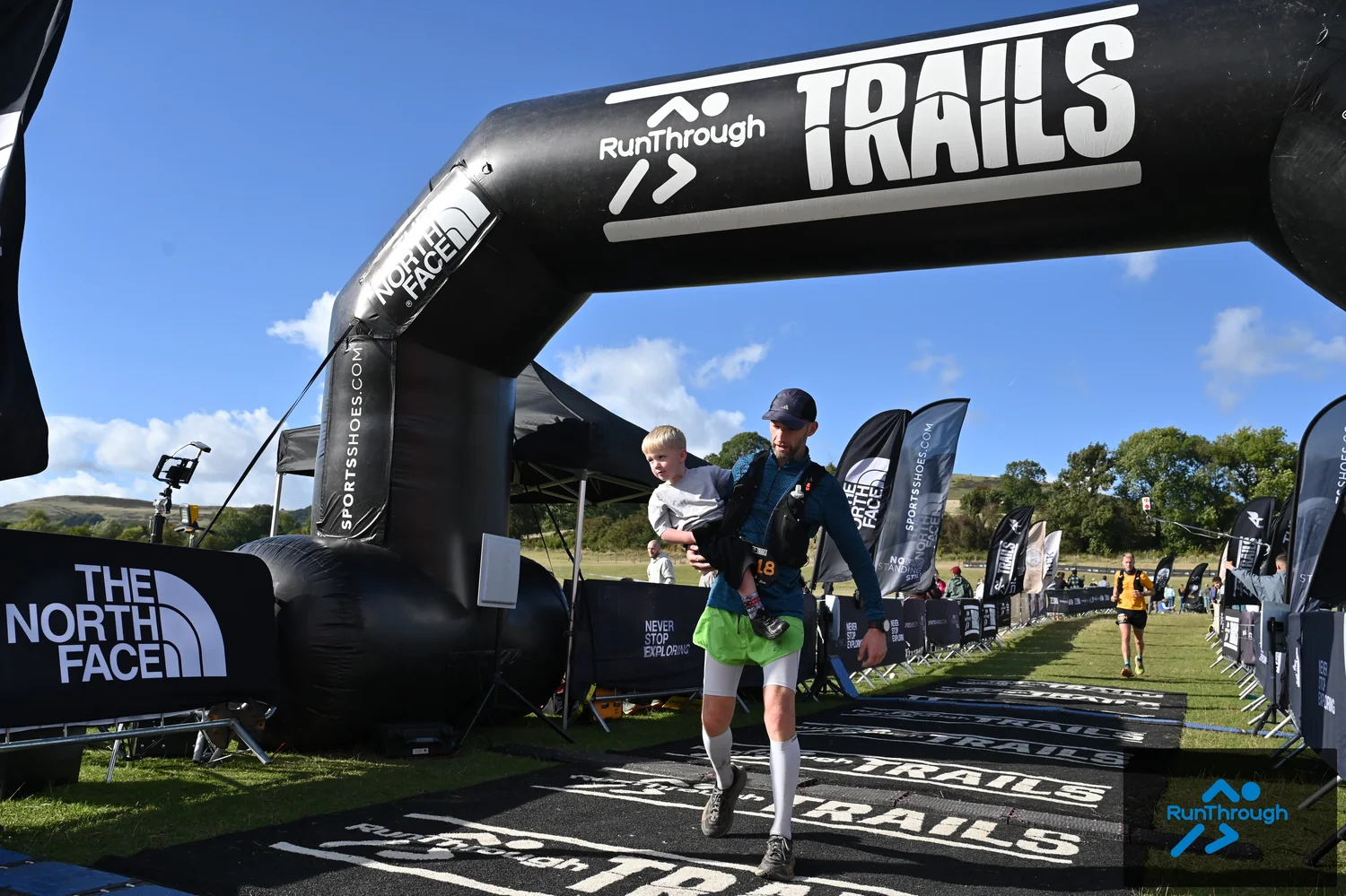
I'm James Gonzo, a beginner-friendly PT and running coach in Heywood. If you can run for about 30 minutes without stopping, you can get to a half marathon finish line in 16 weeks on three runs a week. Walk breaks are allowed, and every session is in minutes, so pace doesn't matter.
If you can't run 30 minutes yet, start with Couch to 5K and come back. My best Couch to 5K app guide and printable plan will get you there.
I've run a half flat out (1:45:11 at Heaton Park this October) and 52K at Ladybower. What gets you round isn't speed. It's turning up three times a week.
Are you ready to start?
You're ready if you can run 30 minutes (or 5K) at an easy pace, you've run about three times a week for a month or more, and you're injury-free.
The NHS Couch to 5K plan takes you from no running to 30 minutes in 9 weeks, 3 runs a week with a rest day between. Barnardo's beginner half marathon plan also assumes you can already run 30 minutes at an easy pace.
If you haven't exercised for a while, or you have a health condition, check with your GP first. The NHS guidelines say the same.
How long does it take from the couch?
About 6 months is a sensible target from scratch: Couch to 5K (9 weeks), then this plan (16 weeks). That's 25 weeks. Treat it as common advice, not a rule. Some people need longer, and that's fine.
How the plan works
Each week has three runs, a mix of these:
- Easy runs. A pace where you can talk in full sentences. Most of your running should feel like this. Barnardo's says many beginners run their easy runs a little too hard, and Cancer Research UK's training tips say the same: don't run too hard.
- Steady bits. From week 5, one run a week has a few blocks of "steady" running, a bit quicker than easy but not a race. Start and finish easy, and jog gently between blocks. No pace targets.
- The long run. The most important session. It grows slowly, and Saturday or Sunday suits most people. Walk breaks are fine. Barnardo's early long runs use them every 10 to 15 minutes, so a minute's walk at that gap is a good example.
- Rest and strength. At least 2 rest days a week, with one the day after your long run. Add 1 or 2 strength sessions of 15 to 20 minutes on easy days, dropping to 1 in weeks 15 and 16. The NHS says adults should do strength work on at least 2 days a week. Try my Couch to 5K strength plan at home, or gym muscular endurance for runners.
Why minutes, not miles?
Everyone runs at a different pace. In my view, a time-based plan stops slower runners spending far longer on their feet than faster ones.
Your free 16-week half marathon training plan
All times are minutes of running, with walk breaks allowed. "Steady" means a bit quicker than easy.
| Week | Run 1 (easy) | Run 2 | Long run | Notes |
|---|---|---|---|---|
| 1 | 30 min | 30 min easy | 40 min | Walk breaks fine |
| 2 | 30 min | 30 min easy | 45 min | |
| 3 | 35 min | 30 min easy | 50 min | |
| 4 | 30 min | 25 min easy | 40 min | Cut-back week |
| 5 | 35 min | 35 min with 4 x 3 min steady | 55 min | |
| 6 | 35 min | 35 min with 4 x 3 min steady | 60 min | |
| 7 | 40 min | 35 min with 3 x 5 min steady | 70 min | |
| 8 | 30 min | 30 min easy | parkrun or 50 min | Cut-back week, parkrun as a test |
| 9 | 40 min | 40 min with 3 x 5 min steady | 75 min | |
| 10 | 40 min | 40 min with 2 x 8 min steady | 85 min | |
| 11 | 45 min | 40 min with 2 x 8 min steady | 95 min | |
| 12 | 35 min | 30 min easy | 60 min, or a 10K race | Cut-back week |
| 13 | 45 min | 40 min with 2 x 10 min steady | 105 min | |
| 14 | 45 min | 45 min easy | 120 min | Longest run, about 10 to 11 miles for many beginners |
| 15 | 35 min | 30 min easy | 75 min | Taper starts |
| 16 | 25 min | 20 min easy + 4 short strides | RACE DAY | Rest 2 days before |
Strides are short, relaxed bursts of faster running to wake your legs up, with a walk to recover. The weekly total never jumps by much in one go.
When to start for a spring 2027 race
Count back 16 weeks from race day. Dates are from each official page, checked 26 October 2026:
- Liverpool Half Marathon, Sunday 14 March 2027: start week 1 on Monday 23 November 2026.
- Wilmslow Half Marathon and RunThrough Cheshire Spring Half (Knutsford), both Sunday 21 March 2027: start on Monday 30 November 2026.
RunThrough's page showed £42 plus a 5% booking fee for Cheshire Spring (checked 27 Oct 2026), with that price running to 21 February 2027. Prices change, so check before you enter.
Want to start earlier? Repeat a week, or add a couple of easy weeks at the front. My post on repeating a week has the same mindset.
Do I need to run 13.1 miles before race day?
No. The Torbay and South Devon NHS Charity 12-week beginner plan peaks at 10 miles, and Barnardo's at a 2-hour long run. Mine peaks at about 2 hours. Race day does the rest.
Missed a run or feeling rubbish?
Don't cram. Skip it and carry on, or repeat the week. Cancer Research UK says to swap a run for cross-training if you're injured, very sore or it isn't safe to run. Try cycling or swimming.
Build up slowly: what the "10% rule" really says
You've probably heard you should add no more than 10% a week. It's a handy guide, not proven science.
A 2014 study followed 874 novice runners for a year (Nielsen et al., JOSPT). Overall injury rates didn't differ significantly. But novices who increased their weekly distance by more than 30% over 2 weeks seemed more vulnerable to distance-related injuries, such as runner's knee, shin splints and ITB problems. The authors say more research is needed, and that novices may be well advised to progress by less than 30% a week over a 2-week period.
A 2015 review of 86 articles (Kluitenberg et al., Sports Medicine) found large differences in injury proportions between types of runner, with novice runners at the top of the range for time-loss injuries. The authors say the figures depend on how injuries are defined and how long people are followed. So: go slowly.
My rules: keep the cut-back weeks, never add a big long run and extra runs in the same week, and if pain changes how you run, stop and get it checked by your GP or a physio.
Fuel, water and kit for the long runs
Sports nutrition research suggests 30 to 60g of carbohydrate an hour as a target for longer events (Burke et al., 2011). Keep it simple: on longer runs, practise with gels, jelly sweets or a banana. Never try anything new on race day.
Before a run, the NHS suggests a carbohydrate-based snack 1 to 2 hours earlier, such as a banana or toast. Take water on longer runs and sip as you go, or plan a route past a shop or tap.
For kit, you want comfortable shoes that are already broken in (see my kit page), anti-chafe balm and a light or hi-vis. This plan runs through winter, so wear reflective clothing in the dark and stick to well-lit routes. You don't need a GPS watch.
Race day: what to expect at your first half
Runner's World UK quotes RunRepeat data giving a UK average half marathon time of 2:02:43 (men 1:55:26, women 2:11:57). That includes experienced runners. Runner's World builds its beginner plans around sub-3:00 and sub-2:30 run-walk finishes, so a finish well over two hours is nothing to be embarrassed about.
Start slower than you think, and walk through the water stations if you like.
Here's my cautionary tale. Before the Heaton Park half I hadn't eaten properly and had slept badly. I had one gel and no water with me, and luckily the course had water stations. Don't be like me: eat breakfast and carry what you've practised with. Full story in my race report.
After the race, take a few easy days, then walk or jog gently.
Quick questions
How long does it take to train for a half marathon as a beginner?
About 16 weeks with this plan if you can already run 30 minutes. From scratch, allow about 6 months, including Couch to 5K.
Can a complete beginner run a half marathon?
Yes, with time. Build up to 30 minutes first, then follow a plan. Run-walk is fine.
How many days a week should I run?
Three is enough for a first half. Add 1 or 2 short strength sessions and at least 2 rest days.
Do I need to run the full 13.1 miles in training?
No. A long run of about 2 hours is plenty for most first-timers.
Is it OK to walk during a half marathon?
Yes. Many beginner plans are built on run-walk.
What is a good half marathon time for a beginner?
Finishing is the goal. The UK average is about 2 hours (RunRepeat, via Runner's World UK), and that includes experienced runners.
How long should I train for a half marathon from 5K or 10K?
From a comfortable 5K, plan on the full 16 weeks. From a comfortable 10K, you could start around week 5.
Can I run a half marathon with no training?
I wouldn't. The Nielsen study suggests novices who ramp up distance fast may be more vulnerable to some injuries. Pick a 5K or 10K instead, or train for a later race. If you're unsure, check with your GP.
Sources: NHS Couch to 5K running plan; NHS physical activity guidelines for adults; Barnardo's beginner half marathon plan (PDF); Cancer Research UK half marathon training tips; Torbay and South Devon NHS Charity 12-week plan (PDF); Runner's World UK beginner half marathon plans; Nielsen et al., 2014 (JOSPT); Kluitenberg et al., 2015 (Sports Medicine); Burke et al., 2011; Runner's World UK: what is a good half marathon time?; BTR Liverpool Half Marathon; Wilmslow Running Festival; RunThrough Cheshire Spring Half Marathon. Checked on 26 October 2026, and the RunThrough entry price again on 27 October 2026.
Want a simple plan to follow?
Three runs a week, a long run that grows slowly and the patience to repeat a week will get you there.
If you're in or around Heywood and you'd like someone in your corner for your first half, to sort your pace out and keep the long runs on track, that's what my beginner running coaching is for. Have a look and drop me a message.
Getting fit again after a long break first? Have a look at my Fit Again in 6 Weeks programme. My free Running Exercises page has more.
Which race are you aiming for?
Cheers,
James 👍