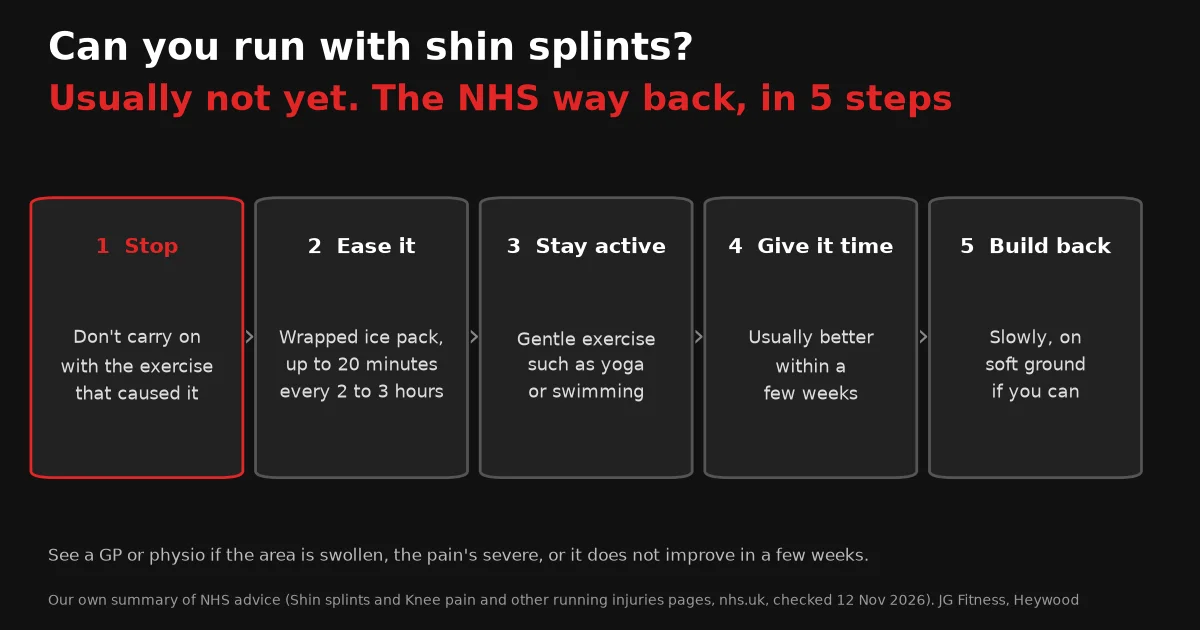
I'm James Gonzo, a beginner-friendly coach in Heywood. Can you run with shin splints? Usually, not yet. The NHS says not to carry on with the exercise that caused them, to switch to gentle exercise such as swimming or yoga while they heal, and to build back up slowly rather than rushing back. Shin splints usually get better within a few weeks, and the way back is slow and steady.
This isn't medical advice. If the pain is severe, carries on when you're resting, or comes with swelling over the shin bone, get it checked: shin pain can have other causes, including stress fractures.
The short answer
The NHS running injuries page is direct: shin pain is likely to stop you running for a while, so take a break for a few weeks before beginning again slowly. Its shin splints page adds that you shouldn't continue the exercise that caused them, and shouldn't rush back at the level you were at.
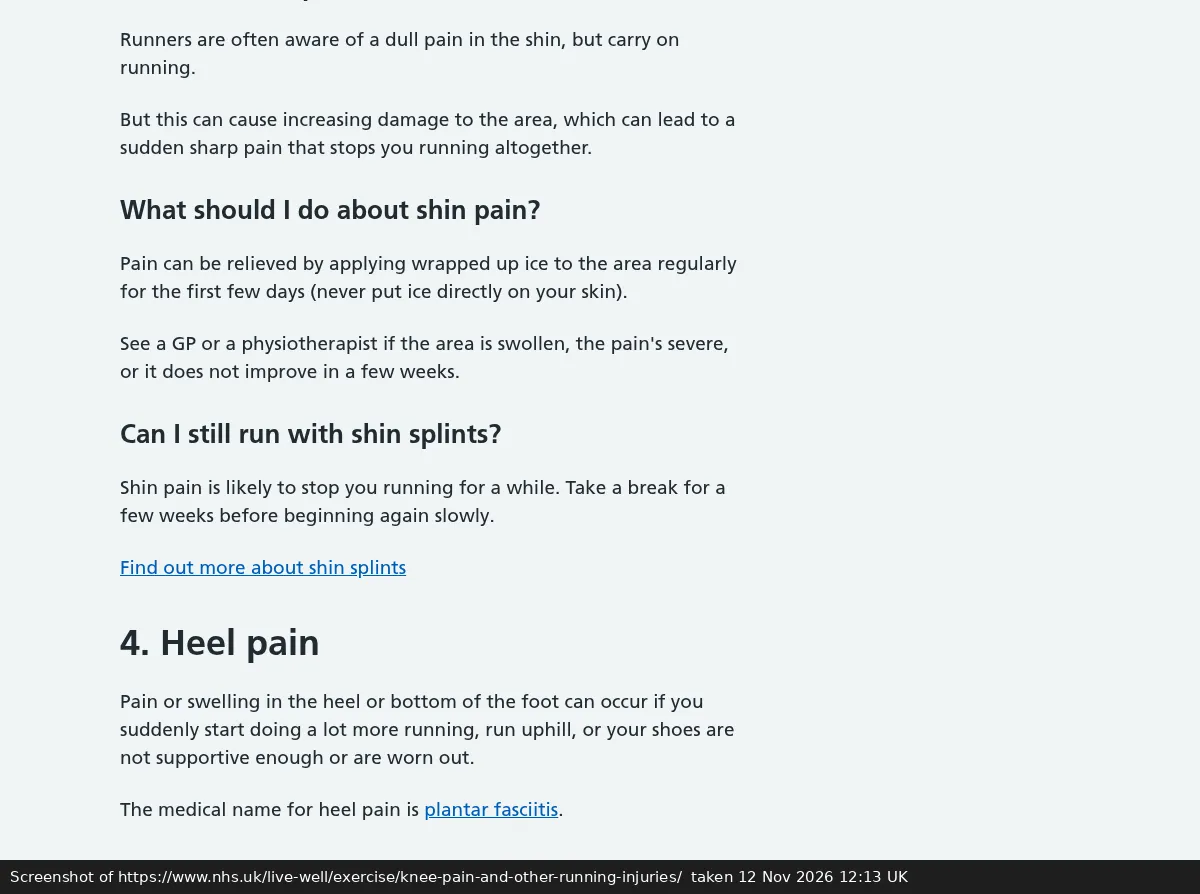
The NHS also notes that runners often feel a dull pain in the shin but carry on running, and that this can cause increasing damage, which can lead to a sudden sharp pain that stops you running altogether. So if you've got shin splints from running, the quickest way back is usually to stop early.
So, can you run with shin splints? Here's how I'd sum up the NHS advice as a simple rule. The wording is mine, not an official scale:
- Stop if your shin hurts when you run. The NHS running injuries page says not to run if you're in pain, and only to start again once you've recovered.
- Ease off into gentle exercise such as yoga or swimming while it heals, as the NHS shin splints page suggests.
- Carry on slowly once you're feeling better: build your routine back up bit by bit, on soft ground if you can.
This is NHS guidance, checked 16 November 2026. The NHS shin splints page says it was last reviewed in February 2023 and was due for review in February 2026.
What shin splints feel like
The NHS describes pain and tenderness along the front of your lower leg. An NHS physiotherapy leaflet from George Eliot Hospital says it can start as a dull ache that gets worse with activity, and can be along the front or inner side of the shin. The area may feel sore to touch, and the pain might ease with rest but come back when you start moving again.
That same leaflet lists other causes of shin pain, including stress fractures (small cracks in the bone), tendon problems and compartment syndrome. That's why it says to speak to a physiotherapist or GP if:
- the pain is so bad you have to stop exercising, or it carries on when you're resting
- the pain doesn't improve, or keeps getting worse, even with rest
- you have pain without an obvious cause
- your muscles feel very tight, hard or swollen
- you notice swelling over your shin bone
If any of those sound like you, the question isn't really "can you run with shin splints" any more. Get it looked at first.
Why shin splints from running happen to new runners
The NHS says shin splints happen when you've put too much stress on your leg, and you're more likely to get them if:
- you've started exercising after not being active for some time
- you run or jump on hard surfaces
- you don't have a good running technique
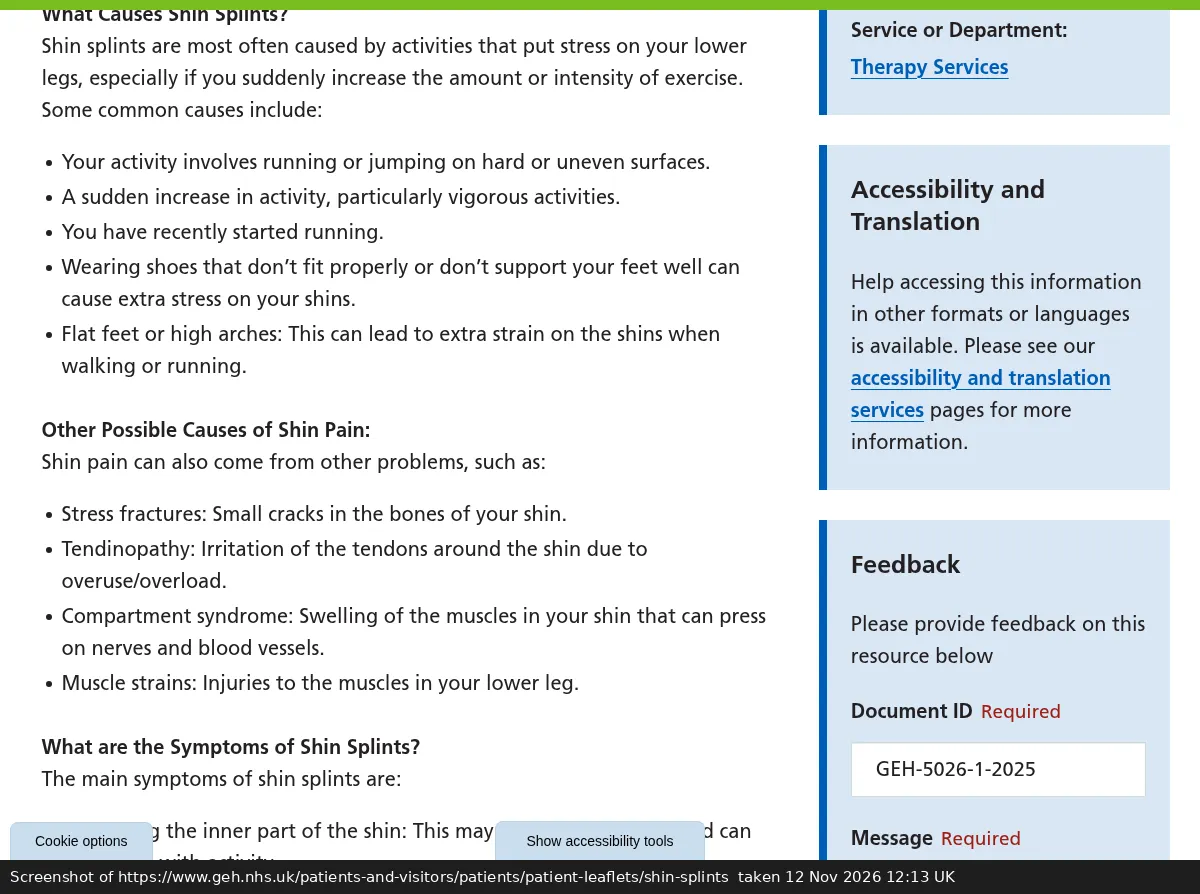
The George Eliot leaflet adds a sudden increase in activity, having recently started running, and shoes that don't fit properly or don't support your feet well.
The first one on the NHS list describes most people starting Couch to 5K. It isn't a sign you're "not built for running". Shin splints from running are usually a sign of doing a bit too much, a bit too soon, for legs that are still catching up.
What to do in the first few days
The NHS suggests:
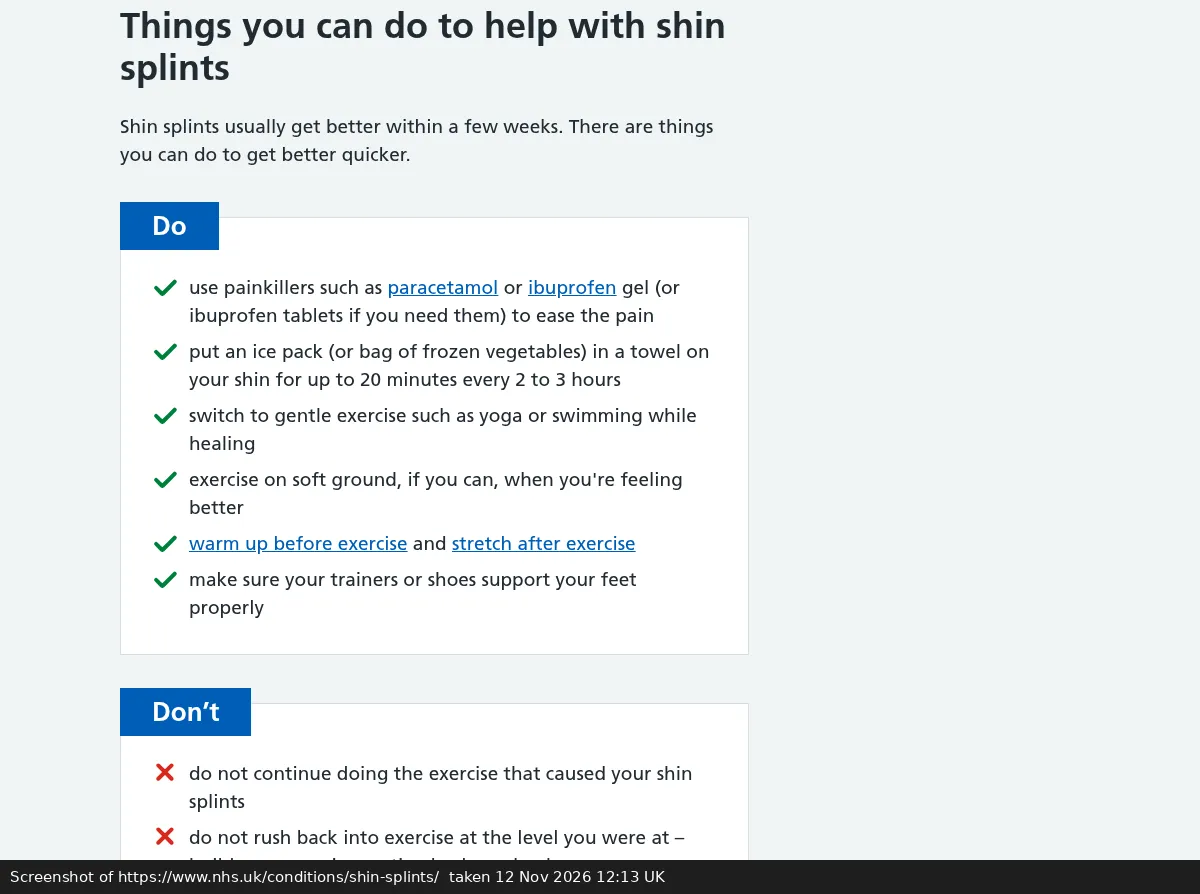
- painkillers such as paracetamol or ibuprofen gel (or tablets if you need them) to ease the pain
- an ice pack, or a bag of frozen vegetables, wrapped in a towel on your shin for up to 20 minutes every 2 to 3 hours
- switching to gentle exercise such as yoga or swimming while it heals
Check the label and with a pharmacist if you're not sure painkillers are right for you. Never put ice straight on your skin.
How to prevent shin splints from running
Prevention is the best answer to "can you run with shin splints", because the shin splints you never get are the ones you never have to rest from. Most of it comes down to load: how much, how hard, and on what. Here's what the NHS and the George Eliot leaflet say, grouped the way I'd coach it.
Build up gradually
The NHS running injuries page says not to increase the intensity or distance of your running too quickly, and to do a similar run at least 3 or 4 times before you increase your pace or distance. The George Eliot leaflet says the same thing in its own words: don't suddenly jump into intense exercise, build up slowly. Couch to 5K is built this way, and if a week feels too much, repeat it.
Shoes and surfaces
The NHS says to make sure your trainers support your feet properly. My guide to the best running shoes for beginners covers what to look for. Running on hard surfaces is one of the NHS's listed risk factors, so park paths and grass are kinder than pavements while you're building up.
Warm up and cool down
The NHS says to warm up before exercise and stretch after. Its running injuries page suggests 5 to 10 minutes of brisk walking or gentle jogging to warm up, and the NHS Couch to 5K plan builds in a 5 minute warm-up walk and a 5 minute cool-down walk on every run.
Calf and shin strength
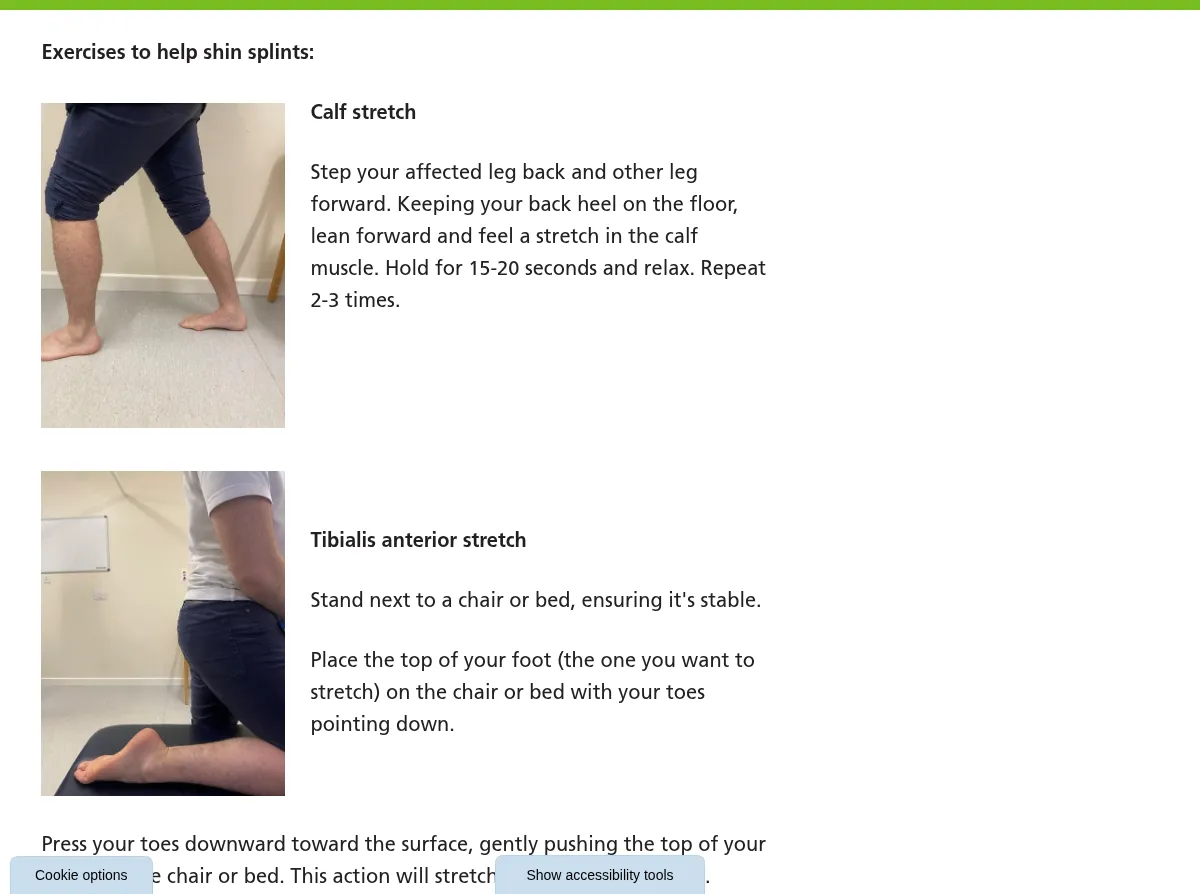
The George Eliot leaflet says that once the pain starts to ease, strengthening the muscles in your lower legs helps stop shin splints coming back, and a physiotherapist can give you a plan. The exercises it shows are:
- Calf raise: rise up onto your toes, pause, then lower slowly. The leaflet suggests 10 to 15 reps, 2 to 3 sets.
- Ankle dorsiflexion: with a resistance band looped over the top of your foot, pull your toes up towards your shin, then return slowly. Again 10 to 15 reps, 2 to 3 sets.
- Calf stretch and front of shin stretch: each held for 15 to 20 seconds, 2 to 3 times.
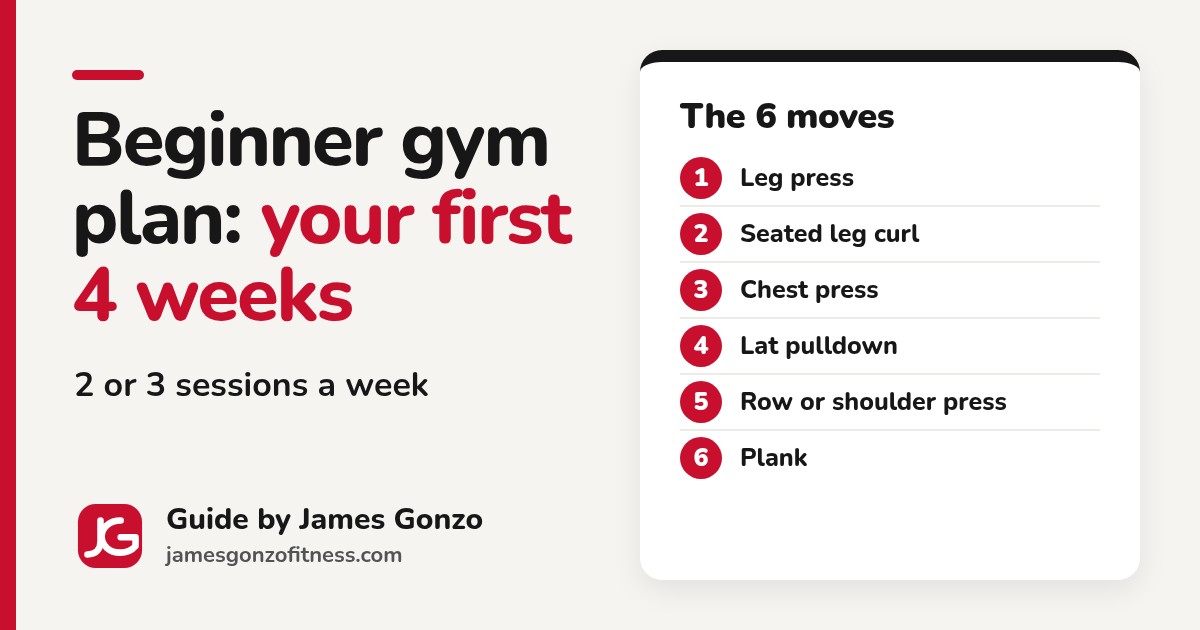
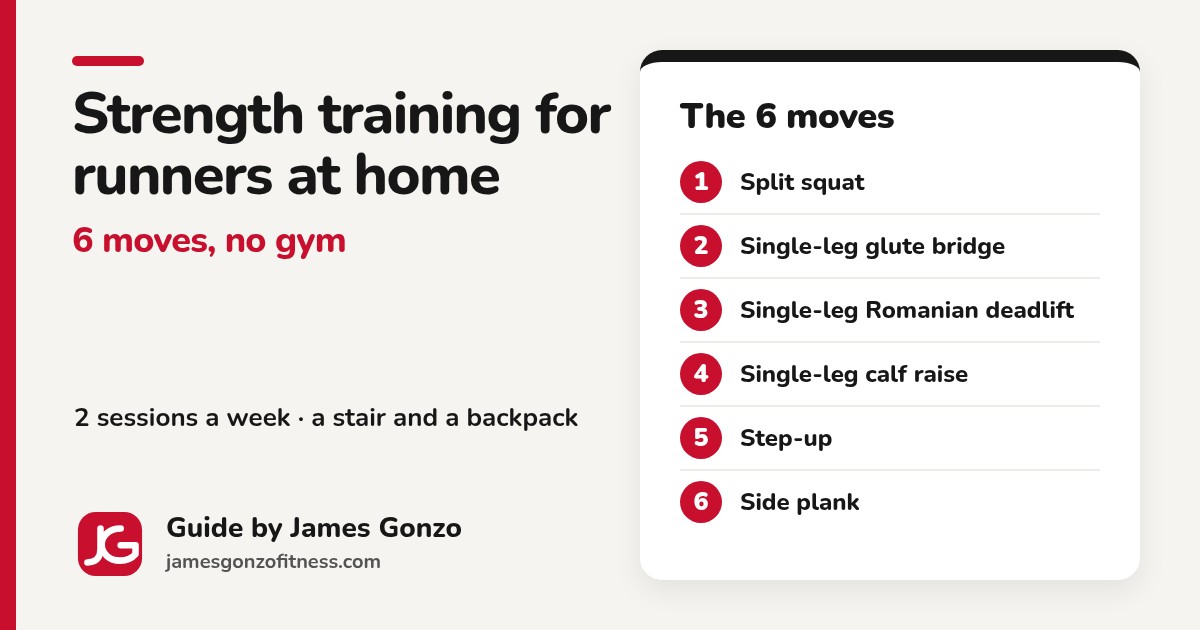
Only start these once you're pain-free, and stop if they bring the pain back. For general strength on your rest days, my free Couch to 5K strength plan and strength training for runners at home are good places to start. For a simple week to follow, grab my free plan.
Getting back to running
The NHS says to build your exercise back up slowly, and exercise on soft ground if you can once you're feeling better. The George Eliot leaflet says to build up gradually to your previous activity levels after a period of rest.
When people ask me "can you run with shin splints yet?", I point them to how everyday life feels first. Here's how I'd stage it. This is my coaching rule of thumb, not an official plan, and there are no set week counts because everyone heals differently:
- Walk pain-free first. Don't try a run until everyday walking, including stairs, is pain-free.
- Walk and run. Go back to short run intervals with walking in between, on soft ground if you can.
- Repeat the last week you finished comfortably. Don't jump back in where you left off. If the pain comes back during or after a run, stop and give it more time.
Shin splints on Couch to 5K
If your shins start to hurt partway through Couch to 5K, don't push through to stay on schedule. Can you run with shin splints and still finish the plan? Yes, just later than you planned. The NHS plan says you can complete it in 9 weeks or longer, and repeating is fine. My post on repeating a week of Couch to 5K explains how.
The plan also says rest days are just as important as the runs, because they help prevent injury. If you've been squeezing runs onto back-to-back days to catch up, that's the first thing to change.
When to see a GP or physio
The NHS says:
- See a GP if you've tried things to help and the pain is getting worse or isn't getting better. Its running injuries page also says see a GP or physio if the area is swollen, the pain is severe, or it doesn't improve in a few weeks.
- Get help from NHS 111 if the pain is severe or you've injured your shin.
- Physiotherapy is free on the NHS but waiting times can be long, and in many areas you can refer yourself to NHS musculoskeletal (MSK) services without seeing a GP first.
I'm a running coach, not a physio, so I can't diagnose shin pain or tell you whether you can run with shin splints in your case. If you're not sure what's going on, that's what your GP or physio is for.
Rest now, run longer
So, can you run with shin splints? Not yet, usually. They're a message to slow down, not to give up. Rest, switch to something gentle, then come back a step lower and build up slowly.
While you're resting, my free Couch to 5K strength plan is something useful to do once the pain has eased. And if you're in Heywood and want help getting back on track, my running coaching has a free waiting list for January 2027.
Have your shins ever made you stop? What week were you on?
Quick questions
Can you run with shin splints?
Usually not yet. The NHS says shin pain is likely to stop you running for a while, and to take a break for a few weeks before beginning again slowly.
How long do shin splints last?
The NHS says they usually get better within a few weeks. The George Eliot Hospital leaflet says anywhere from a few days to a few weeks, and longer if you keep pushing through the pain.
Are shin splints common on Couch to 5K?
I don't have a figure for that. What the NHS does say is that you're more likely to get them if you've started exercising after not being active for some time, which describes a lot of people starting the plan.
Should I repeat a Couch to 5K week if my shins hurt?
First rest until the pain has settled. When you go back, start at a week that felt comfortable, which may mean going back more than one week.
Do running shoes cause shin splints?
The NHS shin splints page doesn't list shoes as a cause, but it does say to make sure your trainers support your feet properly. The George Eliot leaflet goes further: shoes that don't fit properly or don't support your feet well can put extra stress on your shins.
Can I run with shin splints if it only hurts at the start?
The NHS running injuries page says not to run if you're in pain. The George Eliot leaflet notes the pain can ease with rest but come back when you start moving again, so pain that fades once you're warm is still a sign to stop and rest.
Cheers, James
← Back to all stories